
Bon Appetite was my first attempt at designing a microgame.
Microgames are games that use a very small number of components. There is no strict definition of exactly how many components a game can have and still qualify, but if it can fit comfortably in your pocket, most gamers would consider it a microgame.
Designing a microgame is quite different from designing a larger game. The limited number of components influences every aspect of the design process and often requires creative ways of implementing game mechanics within those constraints.
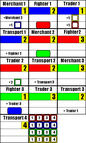
Bon Appetite is a light game for 2–4 players that plays in about 10–15 minutes and is small enough to take almost anywhere. The game consists of just 13 tiles, 1 resource table, 5 resource counters in each of 4 colors, and a starting player marker.
Interestingly, the original theme had nothing to do with food. The game was initially about auctioning spaceships:
"The famous Ganuuk trader is selling off his fleet. Thirteen magnificent spaceships are up for auction, and every aspiring space trader wants a chance to acquire them. Each ship is worth victory points and can help you obtain even more valuable vessels. The trader who earns the most victory points from the newly acquired Ganuuk ships will be declared the winner."
When the publisher acquired the rights to the game, they felt that a food theme would have broader appeal and connect with a wider audience.
One of the things I enjoy most about Bon Appetite is how accessible it is. To create the original version, all you need to do is print a single page containing the tiles and resource table, then cut out the components. The rules fit on a single page and can usually be taught in about five minutes, making it easy to get the game to the table and start playing right away.
Microgames are games that use a very small number of components. There is no strict definition of exactly how many components a game can have and still qualify, but if it can fit comfortably in your pocket, most gamers would consider it a microgame.
Designing a microgame is quite different from designing a larger game. The limited number of components influences every aspect of the design process and often requires creative ways of implementing game mechanics within those constraints.
Bon Appetite is a light game for 2–4 players that plays in about 10–15 minutes and is small enough to take almost anywhere. The game consists of just 13 tiles, 1 resource table, 5 resource counters in each of 4 colors, and a starting player marker.
Interestingly, the original theme had nothing to do with food. The game was initially about auctioning spaceships:
"The famous Ganuuk trader is selling off his fleet. Thirteen magnificent spaceships are up for auction, and every aspiring space trader wants a chance to acquire them. Each ship is worth victory points and can help you obtain even more valuable vessels. The trader who earns the most victory points from the newly acquired Ganuuk ships will be declared the winner."
When the publisher acquired the rights to the game, they felt that a food theme would have broader appeal and connect with a wider audience.
One of the things I enjoy most about Bon Appetite is how accessible it is. To create the original version, all you need to do is print a single page containing the tiles and resource table, then cut out the components. The rules fit on a single page and can usually be taught in about five minutes, making it easy to get the game to the table and start playing right away.
|
Original version all components page
|
|
|
Published version box
|

|