
The design of the game began with a simple idea: I wanted to use tiles as a core component. At the time, I was exploring the possibility of starting my own game company—a dream I still have today, although the challenges involved can be a little intimidating. That, however, is a story for another time.
My goal was to create two or three games that could share the same box size and tile dimensions, helping to keep production costs manageable. Once I settled on the tile concept, I started looking for interesting ways to use them. I wanted to do something I hadn't seen in a board game for quite a while.
After a lot of brainstorming, the idea of constructing something from tiles emerged. Building a spaceship sounded like a fun and thematic direction, so I decided to run with it. Around the same time, I came across an article discussing the growing amount of human-made debris orbiting Earth. That sparked another idea, and before long the concept of collecting and assembling a spaceship from space junk was born.
My goal was to create two or three games that could share the same box size and tile dimensions, helping to keep production costs manageable. Once I settled on the tile concept, I started looking for interesting ways to use them. I wanted to do something I hadn't seen in a board game for quite a while.
After a lot of brainstorming, the idea of constructing something from tiles emerged. Building a spaceship sounded like a fun and thematic direction, so I decided to run with it. Around the same time, I came across an article discussing the growing amount of human-made debris orbiting Earth. That sparked another idea, and before long the concept of collecting and assembling a spaceship from space junk was born.
|
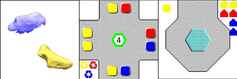
I designed the first version of the graphics bearing in mind that people will want to print the game on their home printer and did the graphics light and although the ships fly in space, the background of the asteroids and ship sections is white. The game was uploaded to BoardGameGeek in 2006.
|
|
|
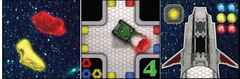
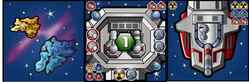
After people start playing it, some found the game very enjoyable but thought the graphics needed a boost. Two versions were created. First version was done by Marco and the second by Orlando Rimarez
|
|
The improved graphics gave the game a boost and increased its exposure. Some gamers even showed the game to publishers they knew which led to an agreement with Mayday Games which published the game in Nov 2009.